Pholoso Afrika Foundation and 2to.iQ
Every mind learns differently. Education should be built that way.
Pholoso Afrika Foundation advances inclusive, adaptive, learner-centred education for neurodivergent children across South Africa and the African continent. Learners should not have to bend to fit rigid systems. The systems should learn to fit the learner.
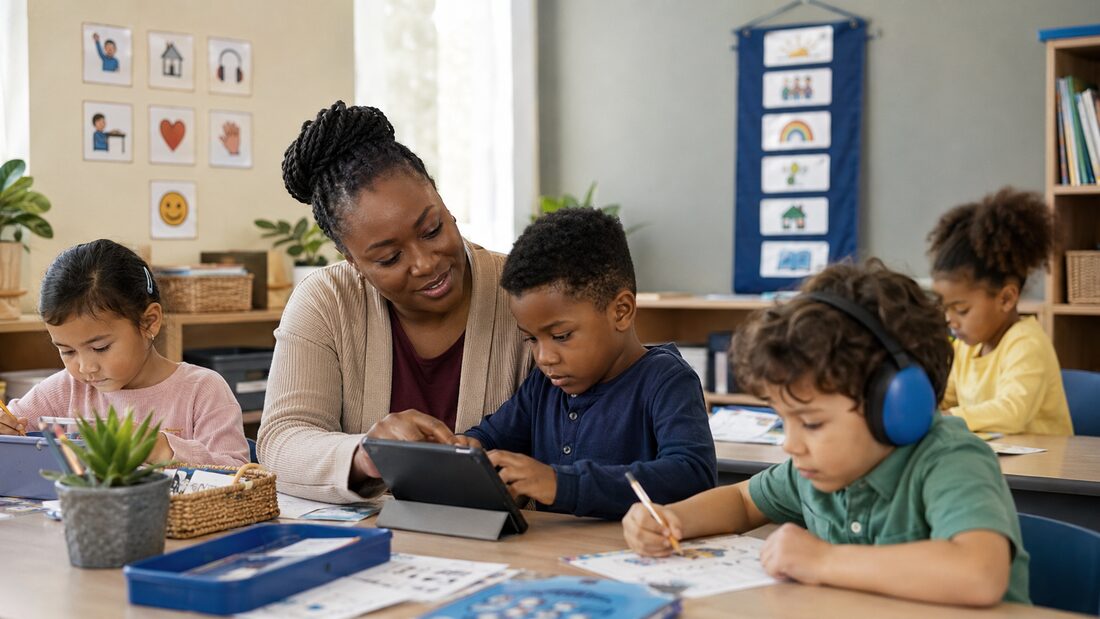
A conviction, turned into a working system.
Both entities were structured on purpose, to combine social-impact delivery with long-term educational innovation.
Pholoso Afrika Foundation
Drives advocacy, awareness, and community-rooted impact. Places neurodivergent children inside the national conversation on inclusion and education.
2to.iQ
Builds the adaptive learning systems that make inclusive education practical, personalised, and scalable for African realities.
Understand the learner. Adapt the system. Connect the support.
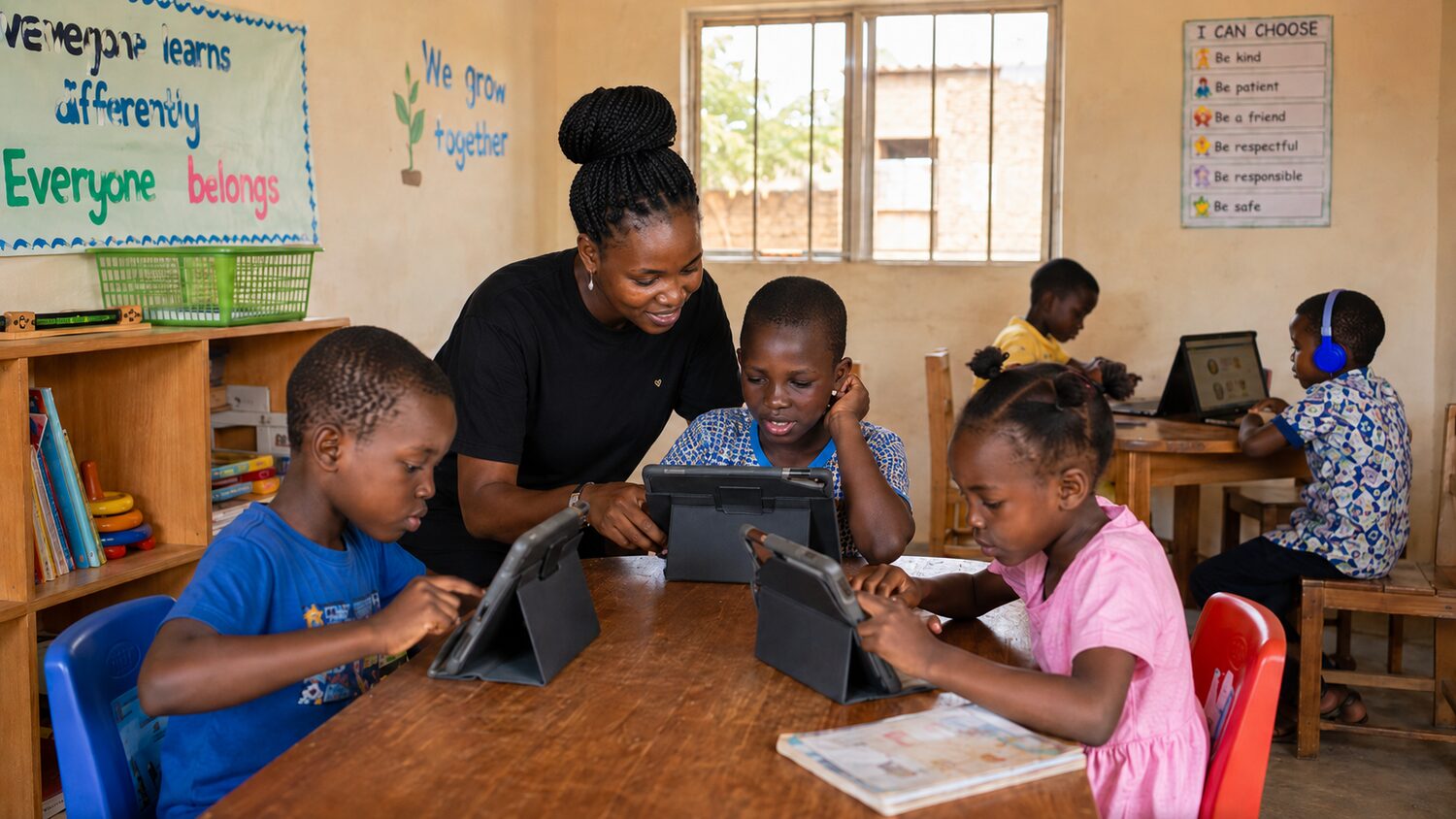
Up to seven in ten school-aged children with disabilities in South Africa are out of school. Neurodivergent learners sit within this underserved group, and many who do attend are placed in separate settings rather than supported within inclusive ones.
South African inclusive-education research; African Journal of Disability, 2024; Statistics South AfricaThree fronts, working at once.
Advocacy and awareness
We place neurodivergent children inside the national conversation. Visibility shifts attitudes. Attitudes shift systems.
Educational innovation
Through 2to.iQ, our edtech strategic partner, we build adaptive learning technology designed around how learners actually think, communicate, and engage.
Ecosystem building
We connect the people around the child. Schools, parents, teachers, therapists, researchers and funders.
A neurodivergent-first platform that adapts to the child.
2to.iQ is the Foundation's edtech strategic partner. It is a wholly educational, neurodivergent-first platform offering adaptive learning that adapts to the child, not the child to the system. It personalises around how each learner thinks, communicates and engages. The name draws from the Sesotho word Thuto, meaning learning.
Help build inclusive education that fits every mind.
Partners do not simply give. They help redesign the systems where neurodivergent children learn and belong.
Every child deserves to learn in a way that fits how their mind actually works.
Pholoso Afrika Foundation is a South African registered non-profit company. We advance inclusive, adaptive, learner-centred support for neurodivergent children and learners, across schools, communities and families.
Difference is not deficit.
Neurodivergent learners are not defined by limitation. They are defined by different ways of thinking, communicating, processing information and engaging with the world.
Education systems should respond to that diversity. Learners should not have to bend themselves to fit rigid, standardised structures. The structures should learn to fit the learner.
Pholoso Afrika Foundation
Advocacy, awareness, and community-rooted impact for neurodivergent children.
2to.iQ (Pty) Ltd
Adaptive, neurodiversity-first learning systems built for African educational realities.

What we are here to do.
To advance inclusive, adaptive, learner-centred educational support systems for neurodivergent children. We pursue this through advocacy, innovation, collaboration and community-driven engagement.
The future we are building.
A future in which neurodivergent children across South Africa and Africa are genuinely understood, supported and empowered. Built on education designed to recognise cognitive diversity rather than suppress it.
Six values, held in practice.
Dignity first
Every learner is treated as capable. Being different is not a deficit.
Inclusion by design
We build for diversity from the start, never as an afterthought.
Adaptive, not standardised
Systems should flex around the learner, not the other way around.
Evidence informed
We learn from data, research and the lived experience of families and educators.
Collaboration over silos
Lasting change needs schools, families, therapists and communities working together.
African led
We build locally grounded solutions, measured against the best standards in the world.
The gap is not in the vision. It is in the implementation.
South Africa adopted its inclusive-education policy, White Paper 6, in 2001. Its intent aligns with the global standards that shaped the movement toward inclusion. For too many learners, daily reality still falls short.
The global benchmark for inclusive education.
South Africa's inclusive-education policy.
Affirms the right to inclusive education.
Inclusive, equitable quality education for all.
Up to seven in ten school-aged children with disabilities in South Africa are out of school.
African Journal of Disability, 2024; Statistics South Africachildren are neurodivergent on the autism spectrum alone, the WHO's conservative global estimate.
World Health Organization, 2023South Africa has held an inclusive-education policy. The promise still outpaces the delivery.
Education White Paper 6When the work carries this much responsibility, trust cannot be decorative. It is built into the model.
Child safeguarding
A signed safeguarding policy and code of conduct govern every interaction with children. Guardian consent and dignity come first.
Privacy, by design
The platform is built to strict POPIA and EU standards for children's privacy. No child is identifiable. Children choose their own pseudonyms and avatars to represent them.
Accessibility, built in
This site targets WCAG 2.2 AA. The Comfort and Access controls let you shape it to your own needs.
Respectful language
We use person-first language, child with autism, as our default. We also respect each person's own preference, and you can switch to identity-first at any time.
Our Safeguarding Policy, Data Protection and Privacy Policy, Code of Conduct and Governance framework guide this work and are available to partners and funders.
NPO 333-132-NPO . CIPC 2025/951168/08 . PBO 930090077 (Section 18A approved)
Clear answers, in plain language.
What does the Foundation actually do?
We advance inclusive, adaptive, learner-centred education for neurodivergent children, through advocacy, educational innovation with 2to.iQ, and by connecting the ecosystem of schools, families and specialists around each child.
Are donations tax-deductible?
Yes. We are a registered Public Benefit Organisation with SARS Section 18A approval, PBO 930090077. Qualifying donations can receive a Section 18A tax-deductible receipt.
How do PAF and 2to.iQ relate?
Two entities, one mission. Pholoso Afrika Foundation is the social-impact engine. 2to.iQ is its edtech strategic partner, building the adaptive learning systems.
How do you protect children and their stories?
The platform meets strict POPIA and EU standards for children's privacy. No child is identifiable. Children create their own pseudonyms and choose avatars that represent them. Add a signed safeguarding policy, guardian consent, and full edit and withdrawal rights, and protection is built into the model, not bolted on.
Understand the learner. Adapt the system. Connect the support.
Pholoso Afrika Foundation works on three fronts at once. Each one strengthens the others.
Advocacy and awareness
We help place neurodivergent children inside the national conversation on inclusion, education and community support. Visibility shifts attitudes. Attitudes shift systems.
Educational innovation
Through 2to.iQ, our edtech strategic partner, we build adaptive learning technology designed around how learners actually think, communicate and engage.
Ecosystem building
We connect the people around the child. Schools, parents, teachers, therapists, researchers and funders. Fragmented support helps no one. Connected support changes outcomes.
Understand the learner. Adapt the system. Connect the support. Sustain the change.
A child's passion is not a side interest. It is something to be honoured, because it may be the clearest doorway into how they learn.
Hlompho means respect, honour, and reverence. For us, it begins with the belief that every child carries something worthy of being seen before they are assessed, corrected, or asked to adapt. We begin with what the child loves, because interests often reveal how they think, communicate, engage and make sense of the world. Learning becomes more personal, more humane, and more capable of unlocking meaningful participation.
Start with how a child learns, and the curriculum opens up.
A child's interest is not a distraction from learning. Used well, it is a doorway to all of it. Choose one, and see.
Stories are not for sympathy. They are how we learn what to change.
Every story here points to something a school, a workplace or a system can do differently. Read one, then look at what it asks us to redesign.
Lived experience already tells us what to redesign.
The friction is rarely the person. It is the design around them. Here is what the stories ask us to change.
Partners do not simply give. They help redesign the system.
Inclusive, neurodivergent education is tied to human development, educational equity and long-term economic inclusion. There is a way in for everyone.
Co-build inclusive education
- B-BBEE Socio-Economic Development value, because our beneficiaries are predominantly Black children with disabilities
- Skills Development value when you fund educator training
- CSI and ESG aligned, credible and brand-safe
Fund infrastructure, not just a programme
- Section 18A tax-deductible giving under PBO 930090077
- Catalytic support for early, adaptive systems
- A legacy in a national model of inclusion
Partner on inclusive practice
- Pilot 2to.iQ in controlled, supported settings
- Affirming, learner-centred teaching support
- Join a connected ecosystem of specialists
A registered Public Benefit Organisation. NPO 333-132-NPO . CIPC 2025/951168/08 . PBO 930090077 (Section 18A approved)
Fund their future, light their path.
Tell us how you would like to be part of this. We will reply with care.
A growing hub for families, educators and anyone building inclusion.
Practical, plain-language and dignity-led. Built to be found when someone types their worry into a search bar at midnight.
Understanding your child's learning
How to recognise and support different ways of thinking, communicating and processing, at home and at school.
Guide in developmentInclusive classroom starters
Low-cost, high-dignity adjustments any teacher can make, no specialist budget required.
Toolkit in developmentAfrican-context evidence library
Plain-language summaries of the research behind our work, each with its source, so you can check us.
Library in developmentSensory-friendly checklist
Redesign a classroom, a clinic or a home for different minds. A practical audit anyone can run.
Checklist in developmentInclusive education, explained
South African policy on inclusive education, from White Paper 6 onward, in language a tired parent can use.
Explainer in developmentShort articles on dignity and design
Ideas at the meeting point of neurodiversity, inclusion and how we build the world around us.
Publishing soonLet us continue the conversation.
Share a story, ask for support, or start a partnership. Every message is treated with care, consent and dignity.